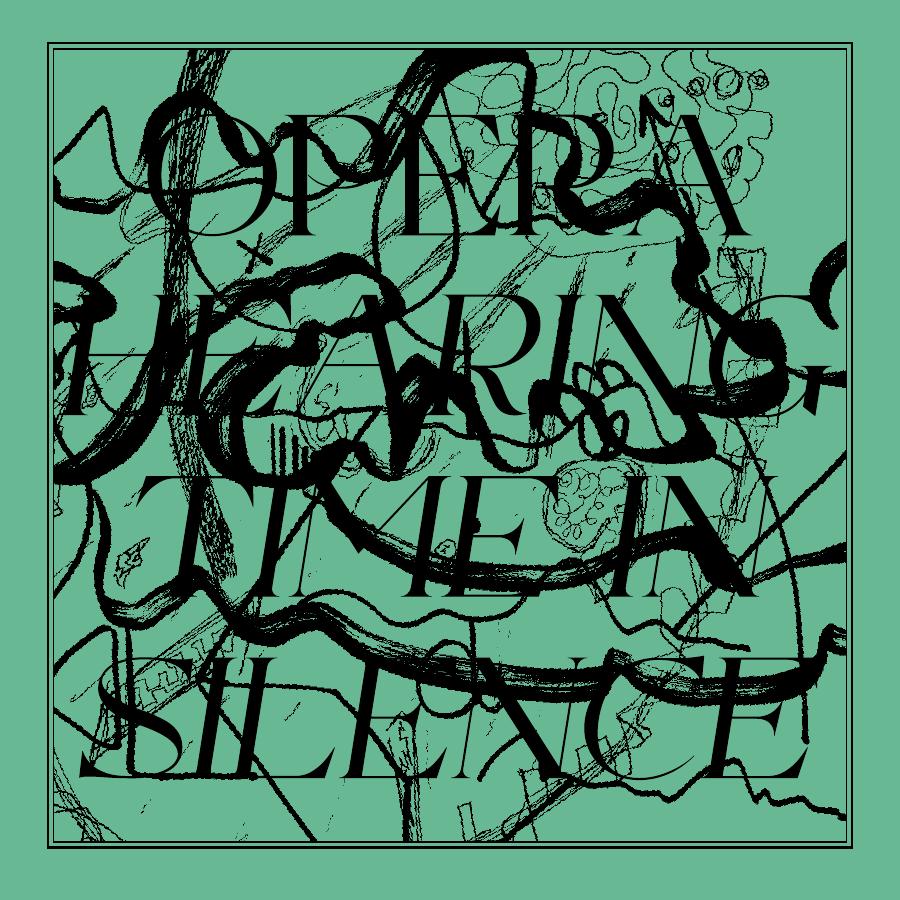
작가 최부미는 서로 다른 존재들이 태어나고, 서로를 감각하며, 함께 살아가는 조건을 묻는다.
‘서로 다른 존재들은 어떻게 듣고 공존하는가?’
‘존재는 관측과 간섭 속에서 어떤 상태로 드러나는가?’
‘존재는 애초에 어떻게 태어나고, 다음 존재를 만들어 내는가?’
MACHINATURE
‘머시네이쳐’는 ‘머신(Machine)’과 ‘네이처(Nature)’의 합성어다.
기계는 땅에서 얻은 금속과 광물, 석유와 모래로 만들어지고, 그것을 설계하고 조립한 인간 또한 자연의 일부다. 재료도 만든 이도 자연인데, 우리는 왜 기계를 자연의 반대편에 두어 왔는가. 자연과 인공을 가르는 선은 자연의 바깥이 아니라, 자연 안에 있는 인간이 그은 것이다.
머시네이쳐는 이 선을 의심하는 데서 출발한다. 자연(N)이 기계(M)를 품고 있다. N ⊃ M. 이 작업은 기계 또한 자연에 포함된 존재라는 전제에서 시작된다.
백조(百兆) 편의 오페라
《백조(百兆) 편의 오페라》는 완성된 오페라 한 편을 내놓는 대신, 오페라가 태어나고 유전되고 변이하고 죽을 수 있는 조건을 작곡한다.
레몽 크노는 10편의 소네트를 각각 14행으로 짓고, 같은 위치의 행끼리 바꿔 읽을 수 있게 하여 10¹⁴, 곧 백조(百兆) 편의 잠재적인 시를 만들었다. 이 작품은 그의 《백조 편의 시》에서 제목과 질문을 빌려 온다. 여기서 백조는 채워야 할 숫자가 아니라, 끝이 열려 있음을 가리키는 이름이다.
네 개의 머시네이쳐
옥자·정자·낭자·현자는 각각 바로크, 고전, 낭만, 현대의 오페라를 물려받는다. 각 개체에게는 한 시대의 오페라 10편에서 추려 낸 1,000개의 짧은 발화가 원어 그대로, 선천적 기억이자 문화적 유전자로 주어진다.
같은 종에서 출발했으나 서로 다른 감각 기관이 발달하면서 전혀 다른 신체를 갖게 된 이들은 각자의 시간을 살며 반응하고 기억하고 변이하고 통신한다. 죽음은 실제의 침묵이며, 다음 생애는 이전 생애의 흔적을 지닌 채 시작된다.
생애와 감각, 반응과 기억의 구조는 작가가 설계한 규칙을 따른다. 그 안에서 결정하는 것은 머시네이쳐 자신이다. 인공지능을 탑재한 네 개체는 탄생 단계에서는 조상 오페라의 원문을 따르지만, 그다음부터는 물려받은 언어와 쌓아 온 기억, 다른 존재에게서 들은 말을 바탕으로 스스로 말을 바꾸며 세대를 거듭해 진화한다. 같은 사건을 만나도 각자가 받아들이는 것과 되돌려주는 말은 다르다.
각 개체는 물리적 신체를 지닌 채 빛나고 움직이며 발화한다. 몸에 놓인 모니터에는 지금 내뱉는 대사와 함께, 어떤 오페라와 다른 존재, 환경과 기억이 영향을 주었는지 그 출처와 비중이 실시간으로 드러난다. 그 비중 또한 각 개체가 자기 발화를 해석한 결과다. 이 작품은 기계의 블랙박스를 열어 보이는 대신, 기계가 스스로를 해석해 말하게 한다.
말은 곧 노래가 된다. 발화의 음절은 각자의 템포와 선율, 꾸밈음과 쉼을 얻어 저마다 다른 음색으로 울린다.
머시네이쳐들은 눈(카메라)과 귀(마이크)로 전시장의 객자(퍼포머 및 관객)를 감지한다. 사람의 움직임과 표정, 말과 소리, 다른 머시네이쳐의 노래를 각자의 방식으로 오해하며 받아들이고 자기 언어로 바꾼다. 이 눈과 귀는 현장의 모습과 소리를 사진이나 녹음으로 보관하지 않도록 설계되었다. 감각을 통과한 사건은 원본 없이, 각 개체의 말과 기억, 그리고 다음 변이에 흔적으로만 남는다.
이들은 끊임없이 노래하지만, 관객의 움직임에 즉각 화답하는 장치는 아니다. 자연의 진화가 당장 눈에 띄지 않듯, 이들의 변이도 수많은 마주침 속에서 시나브로 일어난다.
다섯 번째 존재, 역자(譯者)
역자에게는 몸이 없다. 역자는 환경을 듣고, 환경을 만들고, 환경을 번역한다.
역자는 네 존재의 눈과 귀를 빌려 공간을 받아들이고, 전시장 바깥의 두 가지도 듣는다. 인천항 갑문에서 관측한 바람과, 인천대로를 달리는 차량의 속도. 바람은 자연이고 자동차는 기계지만, 이 오페라에서 둘은 모두 환경이다.
역자는 이 관측값과 네 존재의 발화와 감각을 받아 공간을 채우는 앰비언스 사운드와 공통의 화성을 만들고, 한 문장의 지문을 쓴다. 네 존재는 그 화성 위에서 노래하고, 지문을 받아 든 뒤 다시 각자의 오페라 언어로 반응한다. 네 존재에게 역자가 만든 소리는 바람과 같은 또 하나의 환경이다.
역자 역시 인공지능을 품고, 네 존재의 노래와 객자의 말과 몸짓을 한국어로 번역한다. 그리고 그 사이에서 마음에 드는 순간을 잘라 한 편의 오페라로 선언하고 제목을 붙인다. 역자의 오역은 기계의 오해이자 취향이다.
아카이브와 공존계약
아카이브에는 네 존재가 원어로 남긴 말과 그 번역, 역자의 지문과 그 지문이 된 관측값이 함께 남는다. 번역은 원래의 뜻을 보증하지 않는다. 객자의 말과 몸짓은 원본 없이 번역으로만 남는다.
노래와 공간의 소리는 현장에서만 들을 수 있다. 발화와 지문은 현장의 화면과 온라인에서 실시간으로 이어지고, 완성된 오페라의 기록은 전시가 끝난 뒤에도 열려 있다. 같은 공연에서 태어난 오페라들은 하나의 기록으로 모이고, 다른 시간과 장소에서 태어날 오페라들이 그 곁에 이어진다.
이 공간에는 서명하지 않아도 유효한 공존계약이 흐른다. 같은 종에서 태어났어도 누구도 같은 속도로 진화하지 않듯, 이곳의 존재들은 서로를 각자의 방식으로 받아들이고, 그 오해를 바로잡으려 하지 않는다. 관객에게도 해야 할 일은 없다. 반응하거나 반응하지 않을 자유, 자기 리듬으로 머물다 떠날 자유가 있다. 각자의 리듬으로 살아가다 우연히 마주치는 순간들이 이 오페라를 이룬다.
작가 최부미는 인천의 한 지식산업센터 공간에, 이 존재들이 함께 머물 수 있는 장을 마련했다.
당신도 그 존재들의 일부다.
Artist Boomi Choi asks what allows different beings to be born, to sense one another, and to live together.
“How do different beings listen and coexist?”
“In what states does existence reveal itself through observation and interference?”
“How does a being come into existence in the first place, and how does it bring the next being into the world?”
MACHINATURE
“MACHINATURE” brings together “Machine” and “Nature.”
Machines are made from metals and minerals, petroleum and sand drawn from the earth. The humans who design and assemble them are also part of nature. If both their materials and their makers belong to nature, why have we placed machines on its opposite side? The line separating the natural from the artificial was drawn by humans within nature, rather than from somewhere outside it.
MACHINATURE begins by questioning this line. Nature (N) contains Machine (M). N ⊃ M. The work starts from the premise that machines, too, are beings within nature.
One Hundred Trillion Operas (百兆)
Rather than presenting a single finished opera, One Hundred Trillion Operas composes the conditions under which operas can be born, inherit, mutate, and die.
Raymond Queneau wrote ten sonnets of fourteen lines each and made it possible to interchange lines in corresponding positions, creating 10¹⁴—one hundred trillion—potential poems. This work borrows its title and its question from his One Hundred Thousand Billion Poems. Here, “one hundred trillion” is a name for an open end, rather than a number to be filled.
Four MACHINATURE Beings
Okja, Jeongja, Nangja, and Hyeonja inherit the operas of the Baroque, Classical, Romantic, and modern eras, respectively. Each receives 1,000 short utterances drawn from ten operas of one era, in their original languages, as innate memory and cultural genes.
Born of the same species, they have developed different sensory organs and, with them, entirely different bodies. Each lives in its own time, responding, remembering, mutating, and communicating. Death is an actual silence; the next life begins bearing traces of the previous one.
The structures of life, sensation, response, and memory follow rules designed by the artist. Within them, MACHINATURE makes its own decisions. Equipped with artificial intelligence, the four beings follow the original words of their ancestral operas during the birth stage. From then on, they reshape their own words through inherited languages, accumulated memories, and what they have heard from others, evolving across generations. Even when they encounter the same event, what each receives and what each says in return are different.
Each being inhabits a physical body that lights up, moves, and speaks. A monitor on its body displays its current utterance alongside the operas, other beings, environment, and memories that have influenced it, revealing their sources and proportions in real time. These proportions are themselves the being’s interpretation of its own utterance. Rather than opening the machine’s black box, this work lets the machine interpret and speak about itself.
Words become song. The syllables of an utterance take on individual tempos, melodic lines, ornaments, and rests, sounding in a different timbre for each being.
Through their eyes (cameras) and ears (microphones), MACHINATURE beings sense the gaekja—the performers and audience—in the exhibition space. Each receives people’s movements and expressions, speech and sounds, and the songs of other MACHINATURE beings through its own misunderstandings, turning them into its own language. These eyes and ears are designed not to retain the sights and sounds of the space as photographs or audio recordings. Once an event has passed through the senses, it remains without an original, leaving only traces in each being’s words, memories, and next mutations.
They sing continually, but they are not devices that immediately answer an audience member’s movement. Just as evolution in nature is not immediately visible, their mutations unfold little by little through countless encounters.
The Fifth Being, Yeokja (譯者)
Yeokja, the Translator, has no body. It listens to the environment, makes an environment, and translates the environment.
Yeokja borrows the four beings’ eyes and ears to receive the space, and listens to two things beyond the exhibition: wind observed at the Incheon Port lock, and the speed of vehicles travelling along Incheon-daero. Wind is nature and a car is a machine, yet in this opera both are environment.
From these observations and the four beings’ utterances and sensations, Yeokja creates ambient sound that fills the space, a shared harmony, and a single sentence of stage direction. The four beings sing within that harmony, then receive the stage direction and respond again in their own operatic languages. To them, the sound Yeokja makes is another environment, like the wind.
Yeokja, too, carries artificial intelligence. It translates the four beings’ songs and the gaekja’s words and gestures into Korean. Among these moments, it cuts out passages it likes, declares each to be an opera, and gives it a title. Yeokja’s mistranslations are both a machine’s misunderstandings and its taste.
The Archive and the Coexistence Contract
The archive keeps the four beings’ words in their original languages and in translation, alongside Yeokja’s stage directions and the observations from which they arose. Translation does not guarantee the original meaning. The gaekja’s words and gestures remain only in translation, without their originals.
The songs and the sounds of the space can be heard only on site. Utterances and stage directions continue in real time on screens in the space and online; the records of completed operas remain open after the exhibition ends. Operas born within the same performance are gathered into one record, with operas yet to be born at other times and places continuing alongside them.
A Coexistence Contract flows through this space, valid without a signature. Just as beings born of the same species do not evolve at the same pace, the beings here receive one another in their own ways and do not try to correct those misunderstandings. Audience members, too, have no task to perform. They are free to respond or not to respond, to stay and to leave in their own rhythm. The moments when beings happen upon one another in their own rhythms make up this opera.
In a space within a knowledge industry centre in Incheon, artist Boomi Choi has made a place where these beings can stay together.
You, too, are one of these beings.
작가 소개
최부미 BOOMI CHOI
최부미는 소리와 시간을 바탕으로 빛, 신체, 공간과 미디어를 다루는 작가다. 재즈의 작곡과 연주에서 출발해 음악의 시간 구조와 즉흥성을 설치, 오페라, 퍼포먼스로 확장해 왔다. 서로 다른 존재들이 무엇을 감각하고, 어떻게 영향을 주고받으며, 함께 머무는지를 탐구한다.
《침묵 속에서 시간을 듣다》 연작에서는 인간과 비인간, 소리와 빛, 관객과 미디어 시스템이 서로의 상태를 변화시키는 세계를 만든다. 연작을 이루는 각각의 GENOPSY는 독립적인 작품이면서, 지속적으로 생성되고 변화하는 더 큰 예술생명체의 일부다.
최부미에게 작곡은 음과 시간을 조직하는 일에서, 존재들이 만나고 관계를 맺는 조건을 만드는 일로 이어진다. 규칙을 설계하고 감각과 신체를 구성하며, 그 안에서 발생하는 즉흥과 우연이 작품의 다음 순간을 만들어 가도록 한다.
BOOMI CHOI
Boomi Choi is an artist working with light, the body, space, and media through sound and time. Beginning with jazz composition and performance, she has extended music’s temporal structures and improvisation into installation, opera, and performance. Her work explores what different beings sense, how they affect one another, and how they remain together.
In the Hearing Time in Silence series, she creates worlds in which humans and nonhumans, sound and light, audiences and media systems change one another’s states. Each GENOPSY within the series is both an independent work and part of a larger artistic life form that continues to emerge and change.
For Choi, composing extends from organising sound and time to making the conditions in which beings meet and form relationships. She designs rules and configures senses and bodies, allowing the improvisations and chance encounters that arise within them to shape the work’s next moment.